
The Ngorongoro Conservation Area is one of Africa’s most extraordinary wildlife havens, centered around the world-famous Ngorongoro Crater. This vast volcanic caldera holds a dense concentration of wildlife, including lions, elephants, buffalo, and the endangered black rhino, all thriving within its ancient walls.
NGORONGORO CONSERVATION AREA
Overview
The Ngorongoro Conservation Area is one of the most unique wildlife destinations in the world. Its name comes from the Maasai’s onomatopoeic imitation of the cowbell: ngoro ngoro. At the center of this UNESCO World Heritage Site is the vast Ngorongoro Crater, often referred to as the largest intact volcanic caldera on Earth. It measures approximately 19 kilometers across and covering around 260 square kilometers. The crater was formed over two million years ago when a massive volcano collapsed inward.
The Crater
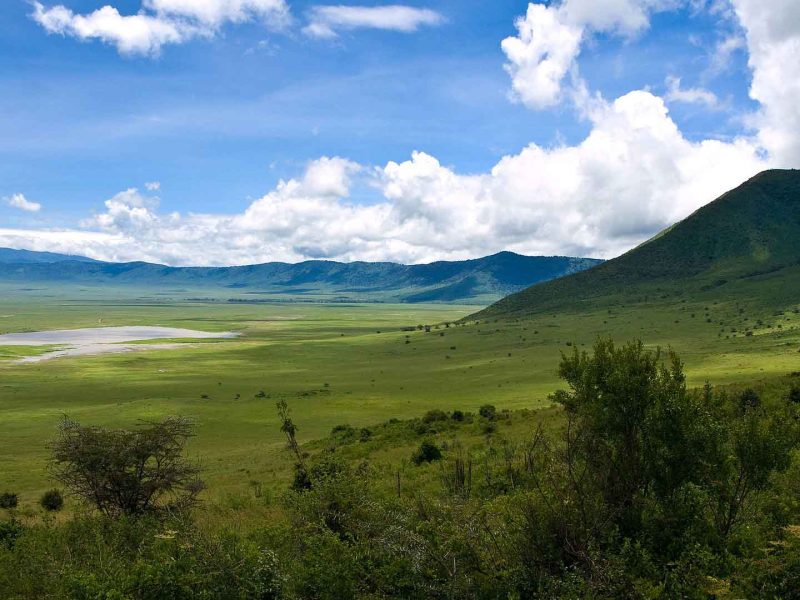
Descending onto the crater floor feels like entering a self-contained world. Encircled by steep walls that rise up to 600 meters, the basin holds a wide mix of habitats: grassland plains, acacia forest, freshwater and alkaline lakes, swamps, and seasonal marshes.
These distinct ecological zones support an unusually dense concentration of wildlife – approximately 25,000. And since the crater floor operates like a microcosm, game doesn’t have to roam far to find water or food, making sightings both frequent and quite close.
What more surprising is how quickly the landscape shifts. You might start a morning tracking lions across open grassland and then pass a herd of elephants feeding quietly along the forest edge. The lake, often rimmed with flamingos, offers refuge to hippos, and the surrounding highlands sometimes shroud the entire crater in morning mist before revealing the full drama of the day.

Ngorongoro Conservation Area
The Migration Pattern and Ecological Balance
Unlike the Serengeti, animals in the Ngorongoro Crater rarely migrate. This is because the crater’s geography acts as a natural enclosure, and its consistent availability of water and grazing throughout the year allows resident populations to thrive without the need to move.
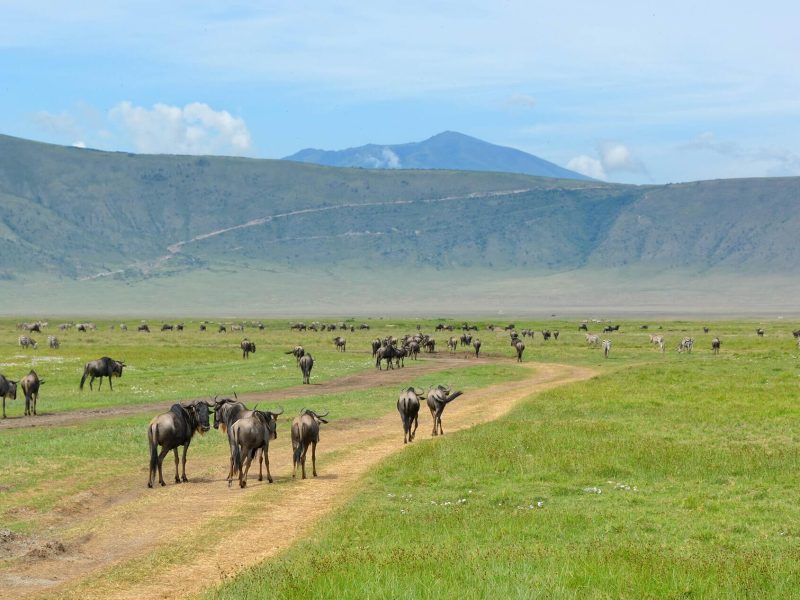
Outside the crater rim, however, open highlands and seasonal corridors connect Ngorongoro to the southern reaches of the neighboring Serengeti, and wildebeests and zebras often pass through these areas during migration cycles. But inside the crater itself, what you see tends to remain, year-round.
This makes it one of the most reliable destinations for game viewing in East Africa. You don’t need to time your visit with migration patterns or changing seasons to see large animals up close. The consistency of wildlife gives the area its distinctive reputation.
Popular Attractions
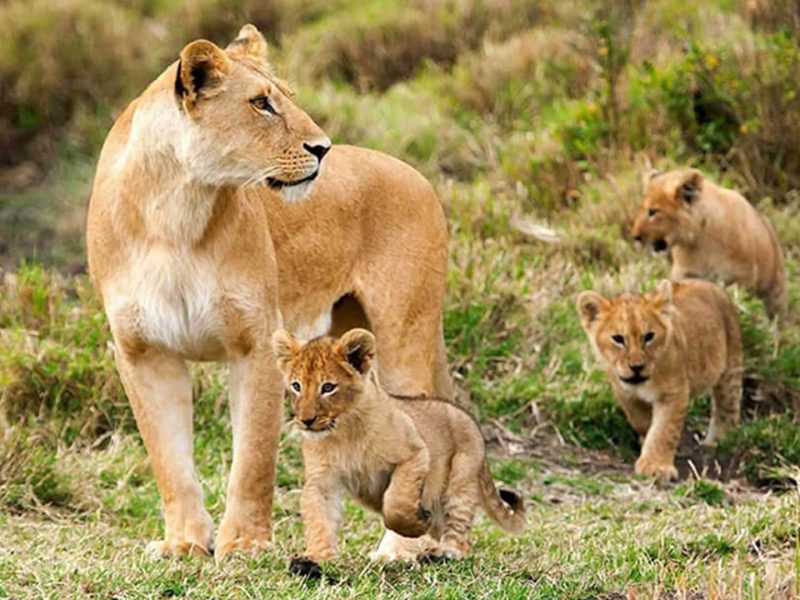
Ngorongoro is one of the few places where it is possible to see the Big Five in a single day. Lions are common and often spotted near the roads. Elephants, particularly older bulls, move quietly through the forested areas.
Buffalos are seen in large herds, while leopards and black rhinos, though more elusive, are both present. The crater offers one of the best chances in Tanzania to see rhinos, thanks to a well-protected and stable population.
Human Presence
The Ngorongoro Conservation Area is also home to pastoralist Maasai communities, who have lived in the region for generations. Unlike national parks, where human settlement is restricted, Ngorongoro was set up to support both wildlife conservation and the traditional way of life of local people.
You’ll see Maasai herders moving cattle across the plains, children walking to school along the ridgelines, and village communities that continue to live with the land, rather than apart from it. This coexistence adds a layer of cultural context to the landscape that you won’t find in more restricted parks.
The Olduvai Gorge
Nearby, Olduvai Gorge, just a short drive from the crater, is one of the world’s most significant paleoanthropological sites. This is where some of the earliest human remains were discovered, offering a powerful reminder that human history, too, has deep roots in this region.
Ngorongoro Gallery

Best Time to Visit Ngorongoro
Ngorongoro can be visited year-round. Wildlife is present in all seasons, and road access into and around the crater is well maintained. That said, July through October tends to offer the driest conditions and clearer views, while the green season from November to May transforms the landscape into a vibrant, grassy basin.
The calving season in nearby Ndutu (southern Serengeti) from January to March also draws many visitors to the area, as the action often overlaps with the crater’s own rich wildlife activity.If you are looking for reliability in sightings, a compact area that delivers a wide range of habitats in a single drive, and a deeper story that includes both nature and culture, Ngorongoro is hard to match.