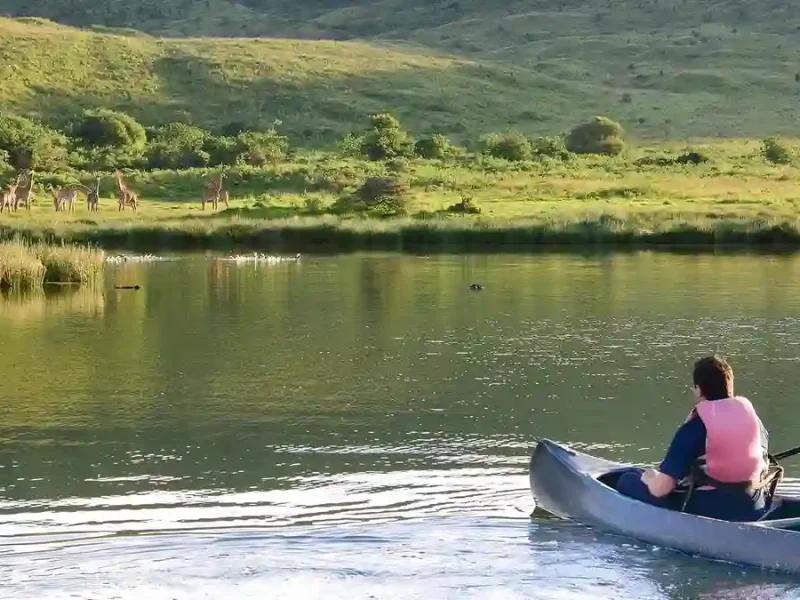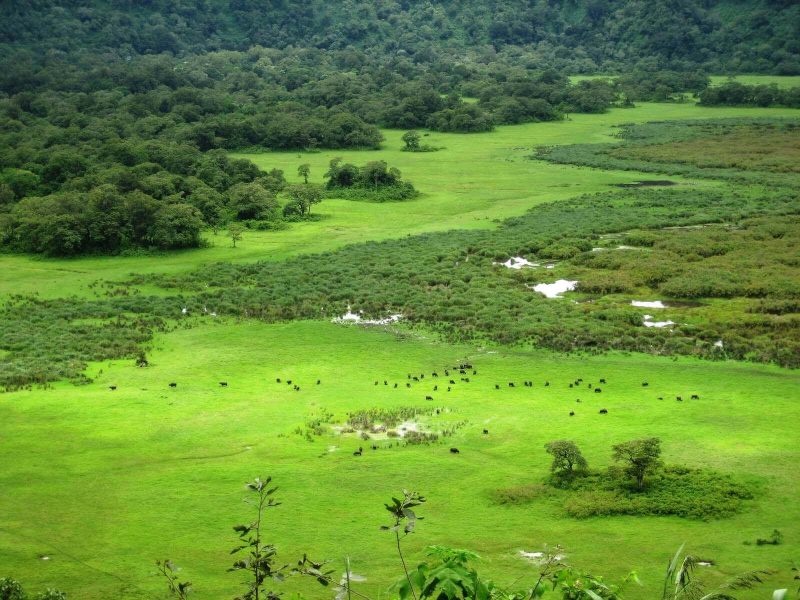
Arusha National Park is a scenic wildlife haven at the foot of Mount Meru, where lush forests, crater lakes, and open plains converge. The park is home to giraffes, elephants, buffalo, hippos, and colobus monkeys, offering close wildlife encounters against a backdrop of volcanic landscapes, waterfalls, and Mount Meru’s towering peak.
ARUSHA NATIONAL PARK
Overview
Just 45 minutes from Arusha City, Arusha National Park is often overlooked in favor of larger, better-known parks along the northern safari circuit. But that’s precisely what gives it its charm. It’s close enough for a full day out yet rich enough to deliver the feeling of having been far away. The park may be compact in size, covering just over 130 square kilometers, but it holds an incredible range of landscapes in its boundaries.
Arusha National Park features four distinct features. To the east, the Ngurdoto Crater, often called a miniature Ngorongoro, offers sweeping views into a steep, forested bowl where buffaloes and warthogs graze in the swampy floor. To the north, the clear, shallow Momela Lakes attract migratory birds and waterfowl. In between is the montane forest – lush, moss-covered, and shaded – where black and white colobus monkeys reign supreme. And towering above it all is Mount Meru, Tanzania’s second-highest peak, rising to 4,575 meters and providing a striking backdrop to nearly every viewpoint in the park.
Wildlife and Birdlife
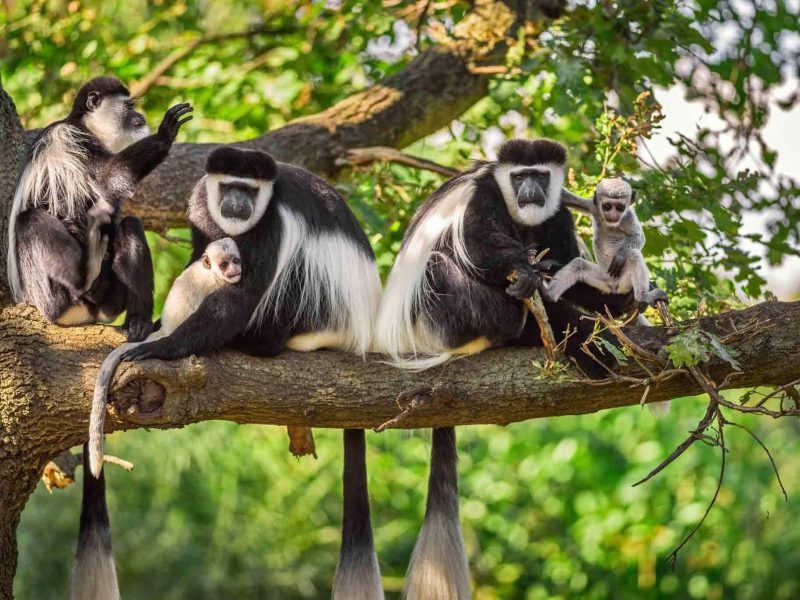
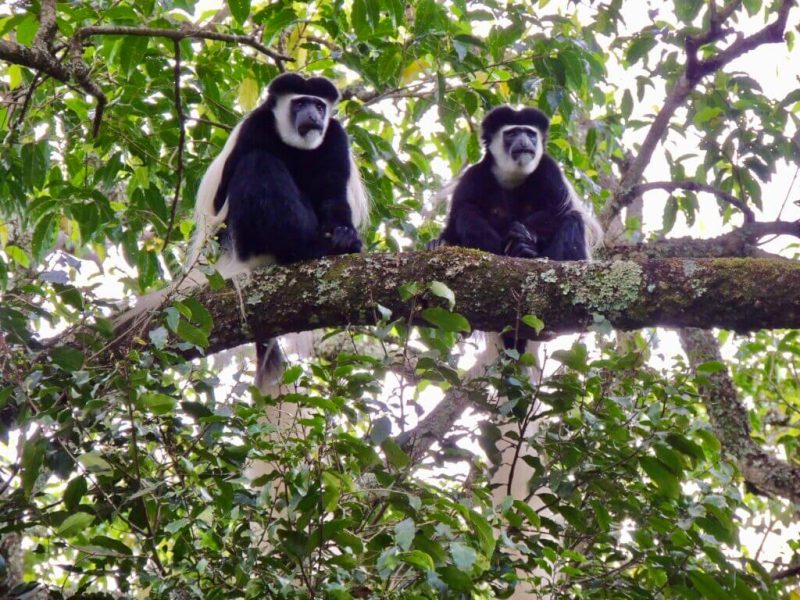
Arusha National Park is one of the best places in Tanzania to see the black and white colobus monkey. These beautiful primates, with their flowing tails and white mantles, are not only rare but also quite photogenic, often seen in family groups swinging through the forest canopy. Blue monkeys, bushbucks, and troops of baboons are also commonly found in the forested sections of the park.
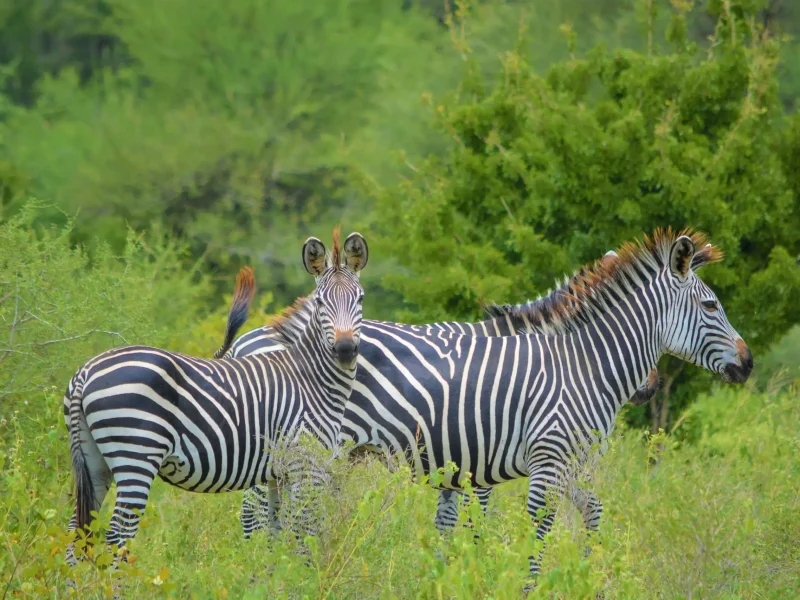
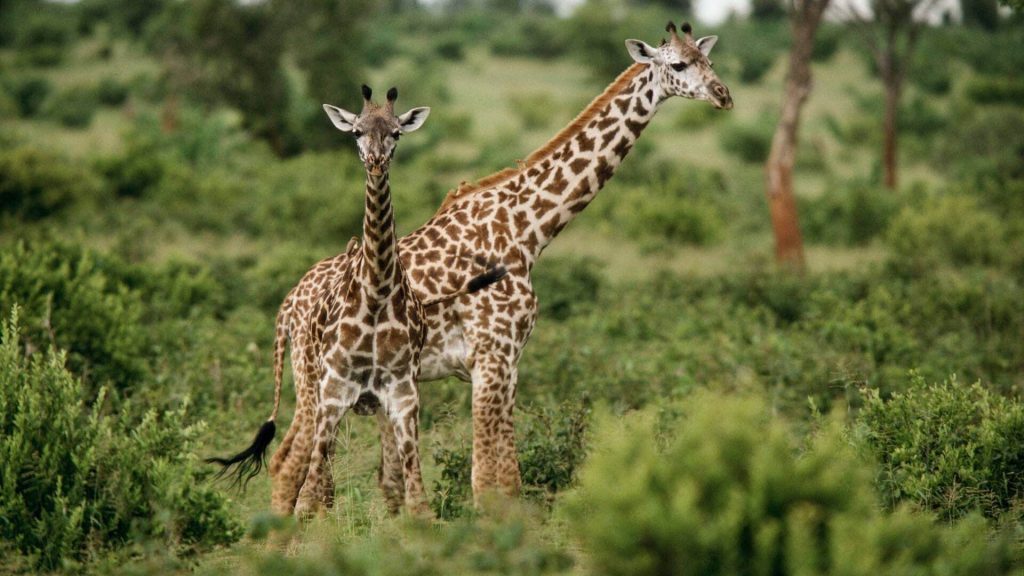
Further into the open glades and around the lakes, giraffes, herds of buffalo, zebras, and waterbucks occupy the open grasslands, while warthogs dart in and out of the reeds. Though larger predators are not commonly seen, leopards do inhabit the park and occasionally spotted.
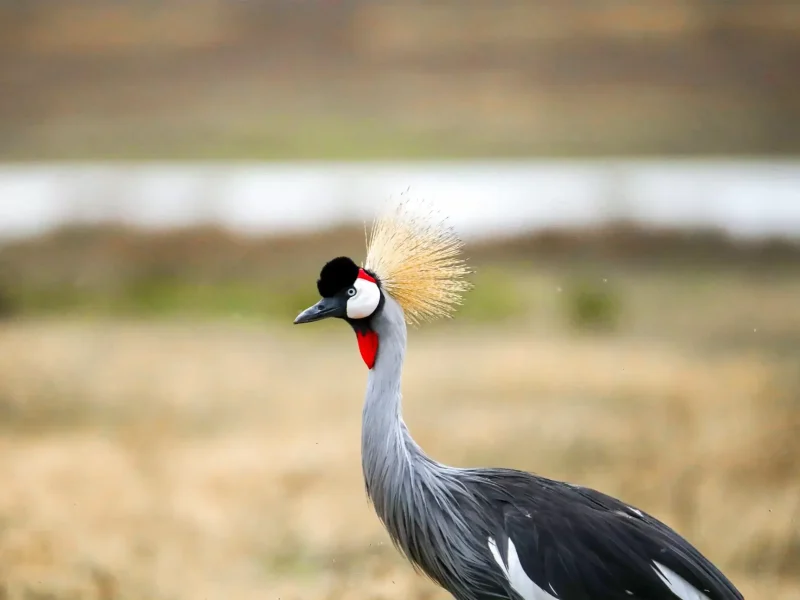
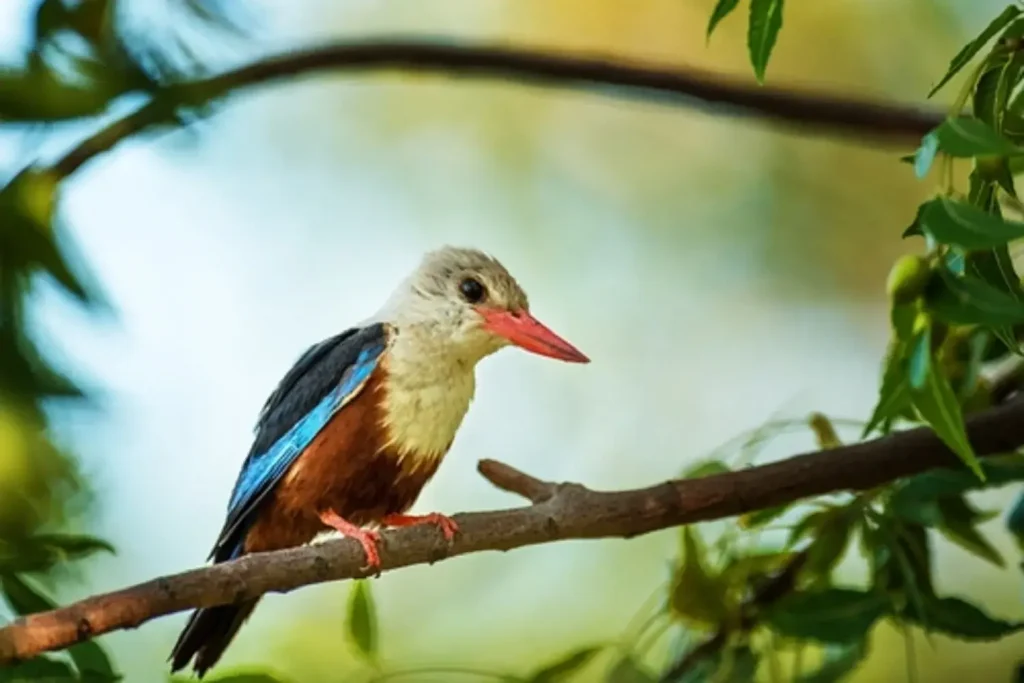
The avian species diversity is exceptional. Over 400 types of birds have been recorded here, including flamingos that turn the Momela Lakes soft shades of pink, silvery-cheeked hornbills, African fish eagles, and Narina trogons deep in the forest. The variety of habitats in such a small area makes birdwatching particularly rewarding, offering both forest and wetland species within a short drive of each other.
The Ecosystem and Landscape
Tarangire’s landscape is defined by a combination of open savannah, river valleys, swamps, and woodland. The most iconic feature, though, is its population of ancient baobab trees. These massive trunks, some of them believed to be over a thousand years old, stand like monuments across the plains. Their hollowed bases and gnarled silhouettes create a visual texture that’s instantly recognizable, giving the park a character all its own.
During wetter months, grasses grow high and lush, while the drier periods reveal bare earth and clearer game tracks. Patches of dense acacia woodland shelter animals in the heat of the day, and seasonal swamps near the southern edges of the park attract grazers and birds in impressive numbers. This mix of habitats supports not only a wide range of wildlife but also lends itself to varied driving routes and ever-changing scenery.
Volcanoes and Wildlife in Harmony
Mount Meru
Often overshadowed by its more famous neighbor, Kilimanjaro, Mount Meru offers a completely different kind of trekking experience. Less crowded, more technical in parts, and highly scenic, it rises in stages through forest, heath, and alpine desert.
Unlike Kilimanjaro, where most treks begin above the treeline, the ascent of Meru starts in thick woodland, giving climbers the opportunity to spot wildlife on foot, including giraffes and monkeys, before gradually ascending into open terrain.
The summit, known as Socialist Peak, the hike is usually done in three to four days, and thanks to its elevation and layout, it serves as a superb acclimatization climb for those aiming to summit Kilimanjaro later in their trip. But even on its own, Meru is a rewarding climb with a strong sense of wilderness and solitude.
Walking Safaris in Arusha National Park
Few places in northern Tanzania offer the kind of walking safari experience that Arusha National Park does. With an armed ranger, the experience shifts from observation to presence.
The most popular walking route winds through the lower slopes near the Ngurdoto Crater and across open grasslands where giraffes often browse within view. It’s common to come across groups of warthogs, troops of baboons, or waterbucks resting in the shade.
Best Time to Visit
June to October
Dry season, clear views of Mount Meru, and excellent wildlife spotting, particularly around the Momela Lakes.
November to December
Short rains, but the park remains open and vibrant. Forest paths are greener, and birdlife increases with migratory arrivals.
January to March
Warm and dry, with some haze. Still a good time for walking safaris and day trips from Arusha.
April to May
Long rains. Trails can be muddy, but the park is atmospheric and far less visited, offering a peaceful, intimate experience.
Arusha Gallery