9 Days Rongai Route
Tour Overview
The Rongai Route is the only Kilimanjaro route that approaches the mountain from the remote northern side, near the Kenyan border. Known for its quiet trails, gentle gradients, and dry conditions, Rongai is ideal for climbers seeking a more peaceful ascent with excellent acclimatization. The route offers wide open landscapes, steady climbs, and a unique perspective of Kilimanjaro before joining the Marangu route for the summit and descending via Mweka.
Full Itinerary
Day 1: Rongai Gate – Simba Camp
8 km | 4–5 hrs | Forest / Moorland
Elevation: 1,950 m → 2,625 m
Altitude Gained: 675 m
The trek begins with a drive from Moshi to the Rongai Gate, located on the quiet northern side of Mount Kilimanjaro. After registration, the trail climbs gently through cultivated farmland before entering pine and montane forest.
This area is rich in birdlife and may offer sightings of colobus monkeys. The gradual ascent allows for an easy first day of trekking. You arrive at Simba Camp, set on the edge of the moorland zone with expansive views across the Kenyan plains.
Day 2: Simba Camp – Second Cave Camp
7 km | 3–4 hrs | Moorland
Elevation: 2,625 m → 3,450 m
Altitude Gained: 825 m
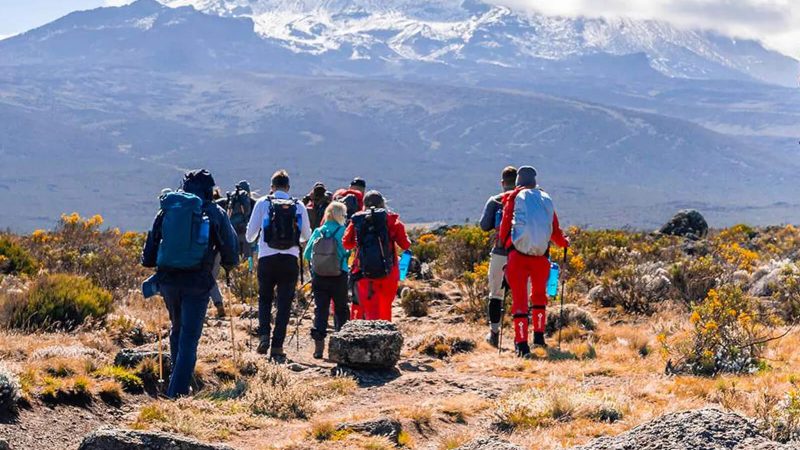
The trail leaves the forest behind and climbs steadily through open moorland. Vegetation becomes sparse, and the landscape opens, offering impressive views of Kibo Peak. The ascent remains gradual, supporting comfortable acclimatization. Second Cave Camp is positioned beneath rocky outcrops, providing shelter from the wind and clear night skies.
Day 3: Second Cave Camp – Kikelewa Camp
6 km | 3–4 hrs | Moorland
Elevation: 3,450 m → 3,630 m
Altitude Gained: 180 m
Today’s hike is shorter and gentler, designed to support altitude adjustment. The trail becomes narrower and more rugged as it crosses alpine meadows and volcanic terrain. Kikelewa Camp is tucked into a protected valley with impressive views of Mawenzi Peak. The afternoon allows time to rest and hydrate in preparation for higher altitudes.
Day 4: Kikelewa Camp – Mawenzi Tarn Camp
5 km | 3–4 hrs | Alpine Desert
Elevation: 3,630 m → 4,330 m
Altitude Gained: 700 m
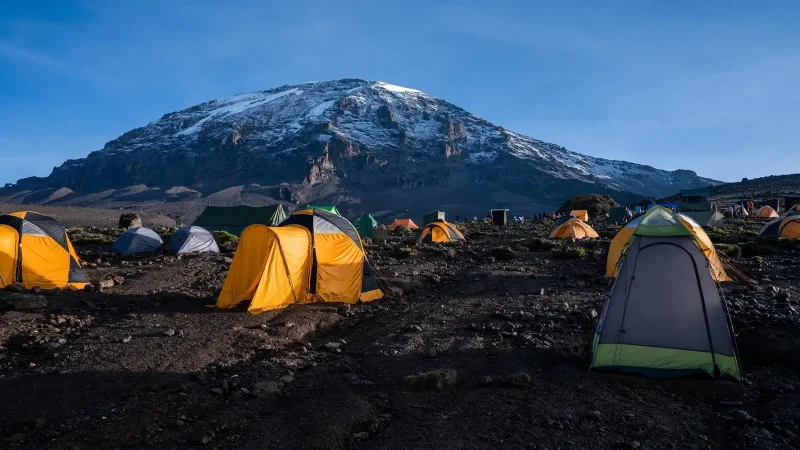
The route climbs more steeply today toward the dramatic spires of Mawenzi Peak. Vegetation disappears, giving way to a stark alpine desert landscape. Mawenzi Tarn Camp is set beneath towering volcanic cliffs beside a small alpine lake. The camp’s remote and dramatic setting makes it one of the most striking locations on Kilimanjaro and provides excellent acclimatization.
Day 5: Mawenzi Tarn Camp – Kibo Hut
9 km | 5–6 hrs | Alpine Desert
Elevation: 4,330 m → 4,700 m
Altitude Gained: 370 m
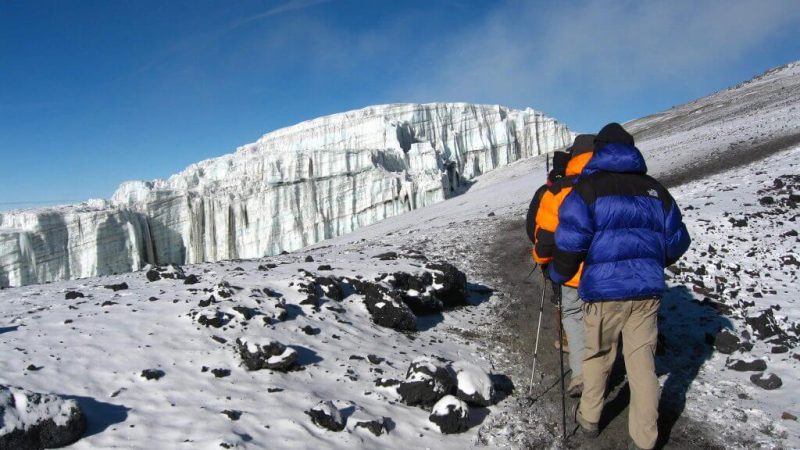
Crossing the broad lunar-like saddle between Mawenzi and Kibo, the trail is wide, open, and exposed. The terrain is dry and barren, with glaciers looming ahead. You arrive at Kibo Hut, the base camp for the summit attempt. After an early dinner and briefing, rest is essential before the midnight ascent.
Day 6: Kibo Hut – Uhuru Peak – Horombo Hut
Summit Ascent: 6 km | 6–8 hrs
Descent: 15 km | 6–8 hrs
Elevation: 4,700 m → 5,895 m
Altitude Gained: 1,195 m
Descent To: 3,720 m
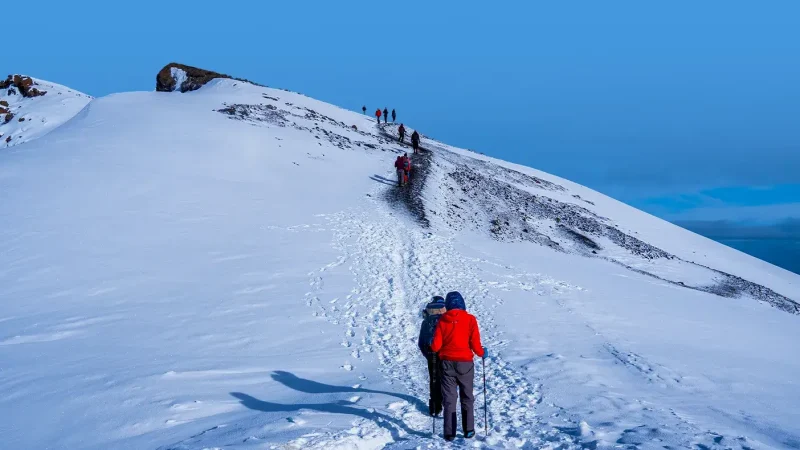
The summit climb begins shortly after midnight. The trail ascends steeply through loose scree and volcanic ash toward Gilman’s Point, reaching the crater rim around sunrise. From here, the route follows the rim to Uhuru Peak, the highest point in Africa. After photos and celebration, you descend to Kibo Hut for a short rest before continuing down to Horombo Hut, where thicker air brings welcome relief.
Day 7: Horombo Hut – Marangu Gate – Moshi
12 km | 4–5 hrs | Rainforest
Elevation: 3,720 m → 1,860 m
Altitude Lost: 1,860 m
The final descent follows the Marangu Route through moorland and lush rainforest. At Marangu Gate, you receive your summit certificates and say farewell to your mountain crew. A vehicle transfer returns you to Moshi for a hot shower, relaxed meal, and reflection on your Kilimanjaro achievement.
Tour Includes
- Experienced English-speaking guides
- Full mountain crew support including cooks and porters.
- All park fees, permits, and VAT
- Meals and drinking water according to the itinerary
- Gate transfers and airport transfers.
- Emergency oxygen cylinder and portable toilet with porter
- High-quality trekking equipment provided
Tour Excludes
- Flights and visa fees
- Travel or medical insurance
- Tips for crew (recommended USD 450 per person)
- Personal gear (sleeping bags, trekking poles, etc.), souvenirs, or additional drinks